
Teya Kepila
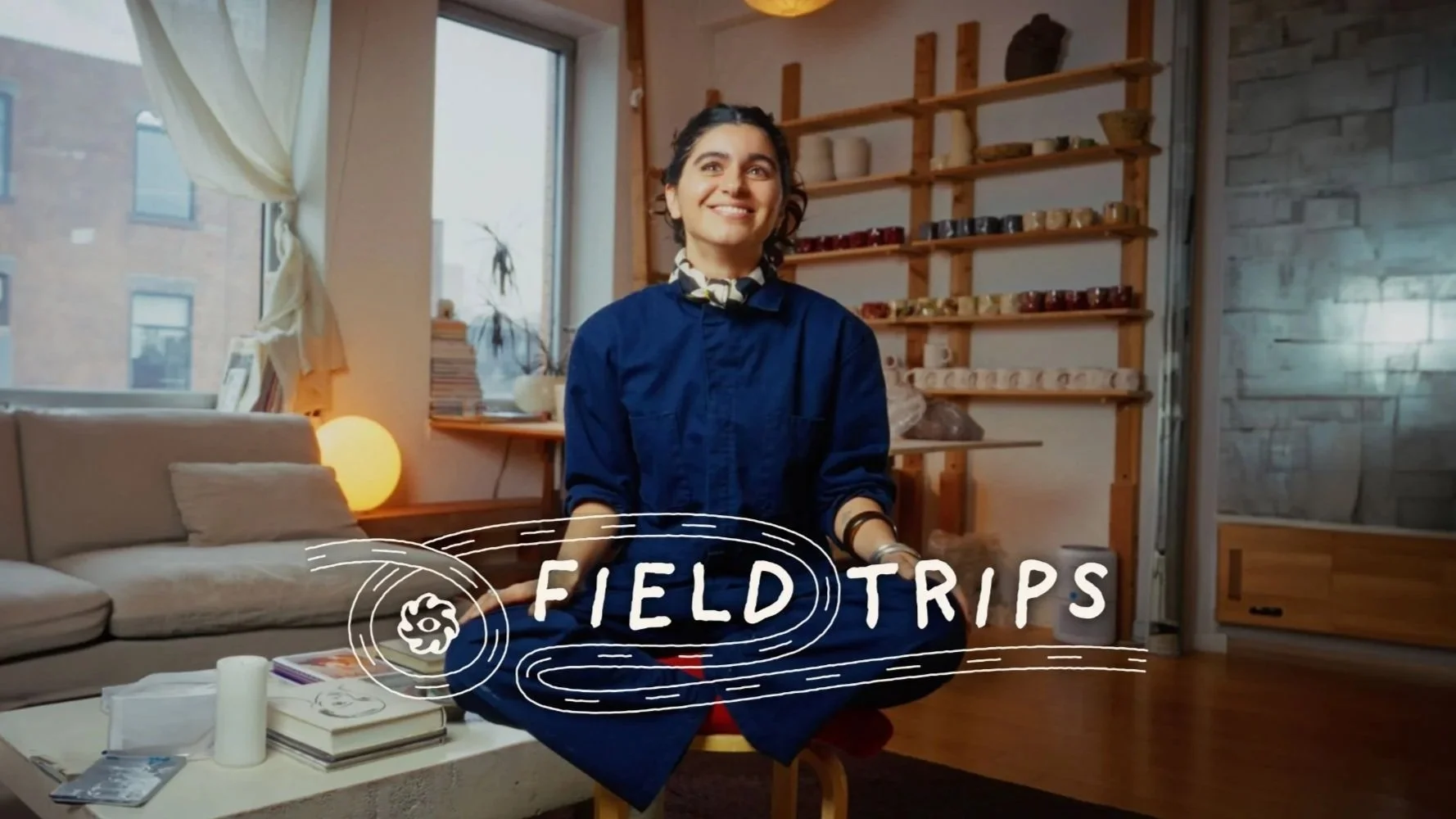
There’s a moment early on when something goes wrong.
A piece explodes in the kiln. A chunk gone. Not cracked. Gone. The kind of mistake that usually sends you back to square one or straight into the trash. Teya Kepila does not do that. She looks at it. Pauses. Shrugs in a quiet, decisive way.
Alright, she thinks. I’m going to glaze it anyway.
That choice says everything.
Teya has been working with clay for seven years, but the instinct behind her work goes back much further. She has been creating since she was nine, earning every dollar that led her here. Long before ceramics, there was her mom painting and offering what Teya calls a subconscious green light to be limitless. No rules. No guidelines. Just the permission to try.
Now she lives in Brooklyn, surrounded by motion. People moving fast. Ideas bouncing around. That contagious New York energy that makes it feel like everyone is making something or about to. You can feel it in her studio. Nothing is static. The work is always becoming.
Clay, especially, demands that mindset.
“There are so many stages with clay,” she says. “You almost have to keep yourself on your toes and constantly adjust to the next thing that comes out of the kiln.”
Nothing arrives exactly as planned. Glazes shift color. Drips appear where they were never intended. The kiln reroutes you. Instead of resisting that, Teya leans in. She talks about accidents the way people talk about life. Like detours that end up revealing something better.
That exploded piece, once glazed, reminded her of rock formations in the desert. Arizona. Massive chunks taken out by time and pressure and still loved. Especially loved.
“Every single thing that happens,” she says, “a kiln explosion, a glaze that changes a different color, all these things are here to reroute you.”
It is not hard to hear the metaphor.
Teya does not rush her work toward an end point. Exhibitions and awards are not the prize. The reward is smaller and somehow bigger. The little moments. The stages. The quiet acceptance that the piece is finished when it is finished, not when you decided it should be.
“It’s never what you originally intended,” she says. “So you almost shapeshift or grow with your piece.”
Her cups feel like evidence of that philosophy. They are not just objects. They are emotional records. Scratches, strokes, layered glazes that feel lived in. When she talks about inspiration, she does not reference other artists as much as she references feelings. Emotional ebb and flow. Sadness next to happiness. Contrast.
She brings up Ratatouille. That scene where Remy combines cheese and strawberry. Alone, they are fine. Together, something explodes into color.
That is what she is chasing.
Sadness is one thing. Happiness is another. Together, they make patterns. That is where the work lives.
To Teya, art is not about what you see first. It is about what lingers after. A cup that becomes more than a cup. Something that makes you feel something you did not expect. Something that asks you to slow down and notice not just the object, but yourself holding it.
Looking ahead, she talks less about plans and more about values. Radical acceptance. Love for oneself. A hope that her work will continue to reflect that, even as she is still figuring out how to live it daily.
“It’s also a journey,” she says. “Just living every day.”
There is no neat ending here. No grand statement about what comes next. Just curiosity. Openness. A willingness to keep showing up, keep wedging clay, keep letting the kiln have a say.
After all, we are all just floating on this floating earth.